
The Long Can Con
Or, Why Canadian Books & Book Events Matter More Than Ever


Can Con and So Much Music
If you grew up anywhere in Canada in the 80s, there was a specific soundtrack to your world. It involved well-known bands like Glass Tiger and Platinum Blonde, Haywire and The Payolas; Strange Advance and Martha and the Muffins and the Spoons. It contained giants, like The Box and Bryan Adams, Men Without Hats and of course, the original sunglasses guy, Corey Hart. It switched tracks in the late 80s, with entirely new slates of bands: The Grapes of Wrath, 54-40, and Sloane, the great Alanis Morisette and national treasures, The Tragically Hip.
Why am I bringing up a bunch of music entertainers (and of course, this was the tip of the proverbial band iceberg) in a post about books? Because what made these bands famous, what got them heard in the first place, was their visibility. And that visibility was made possible through the Canadian Radio-Television and Telecommunications Commission (CRTC)’s Can Con regulations.
First established in 1971, CRTC regulations aimed to ensure that a certain percentage of Canadian-created programming appeared on television and the radio each day, every day. As a result: as the era of the music video took off, Canadian talent launched with it. Soon, an entire generation was regularly watching Bryan Adams play until his fingers bled on Much Music, Canada’s answer to MTV, along with a veritable slew of other Canadian bands. And Canadian youth liked it.

Background: Canada sucks, eh?
For decades before this, it was just a given that Canada lacked a vital, original culture. Our much larger, shinier, better-at-self-promotion neighbour to the south appeared to create all of our culture for us1. And frankly, who could argue with Solid Gold and MTV, Saturday Night Live or David Bowie? Certainly not Canadians, who had a thirst for a culture that spoke to us, and had nothing—supposedly, allegedly—homegrown to quench that thirst. America had New York City, and L.A., and New Orleans. It had jazz and Toni Morrison and vampire novels. And America was what we consumed.
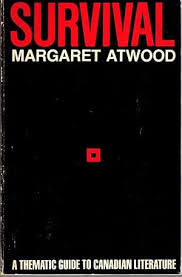
Canada had…nature moments on television involving loon calls accompanied by a sad, lonely little ditty. The Log Driver’s Waltz (admittedly, a classic). The Littlest Hobo on Sunday afternoons. Anne of Green Gables. At the same time, 70s and 80s kids were saturated with the sense of our own alienation amid the sparsely populated hinterlands of Canada2. We were literally, collectively, living Margaret Atwood’s Survival3.
Can Con of the 80s and 90s, on the other hand, flipped that script on its head. Canadians didn’t lack culture or talent: it just lacked platforms and eyeballs and ears. It lacked the visibility necessary to centre that talent in mainstream culture.
And these CanCon rules worked; however difficult, however fraught, an ecosystem was born that brought Canadian musicians together with Canadian (and often international) audiences. We were able to create a nation-wide star system which shaped several generations of youth into a more cohesive national entity, one with a collective, shared past. We all remember the bands, the music. We all gained from this4.
Now I get to the books.
Survivalism
In Canada, the equivalent of Can Con in the literary world exists through the Canada Council for the Arts, which supports both artists and publishers through the Association of Canadian Publishers (ACP), an organization which bears responsibility for ensuring that the majority of its published authors are Canadian.
This matters; and I am not going to quibble or dispute the importance or relevance of any of these institutions or their goals.
What I will say is that the publishing landscape—and readership—has changed dramatically since the advent of these institutional supports. And the systems whose job it is to get Canadian literary talent seen by ourselves and the world are just not operating in the same reality as everyone else at the moment.
Outside of the “Big 5” publishers (who are not Canadian anyway), Canadian publishing is still really a cottage industry, and the supports which keep it functioning aren’t equipped to help it get any bigger.
This system is great if you’re looking to break into publishing by doing that Creative Writing degree or going to lit events around town. It’s not great if you live outside of a major city, or want to break into large markets like the U.S., or want to publish with the Big 5. It’s especially not kind to genre writers, whose books make up the vast majority of all book readership5.
It’s also not great if you intend to produce indie publications, which stand both outside of (most) bookstores and/or the Canadian press publishing circuit, which tends to favour literary works. It’s difficult to know how many indie publications are also genre books, but my guess is that it’s a pretty hefty percentage.
At the same time, the Canadian support systems are meaningless under the weight of Amazon, Kindle Unlimited, and even Kobo and Indigo6. Canadian authors simply cannot be visible under the current system, which means that the readership for Canadian authors becomes smaller and smaller—outside whatever books are being promoted on CBC Reads7.
Comparing the Canadian cottage industry model of publishing to what is happening in the larger publishing ecosystem feels a lot like comparing fleas to a whale. I don’t mean that as an insult; it simply is, because we haven’t switched up our collective tool box to develop different models.
But scratch that. This is the space where indie authors shine.
Indierific
The bold, the brave, the adventurous: Canadian indie authors and a veritable army of industry-adjacent folks are carving out their own, parallel publishing ecosystems. Individuals such as those who put out the HEA newsletter and romance book event calendar and the Canadian Book Library social media accounts; as well as the many lists of Canadian authors, editors, graphic designers being developed is simply staggering.
These individuals are taking up the work of creating cultural visibility across social media platforms, and they are doing so of their own accord. They are doing so for free, and I’ll say it again: they are doing it OUTSIDE the parameters of the Canada Council and their related infrastructure.
This matters, because the Canadian publishing industry is fragile and can only support a small number of people in gaining access to publishing, and at the same time, they aren’t very good at promoting what they sell.
It matters, because publishing lacks those same Can Con fences that would guarantee the world sees and experiences Canadian authors. These folks, though, have volunteered to help Canadian books gain visibility among Canadian readers. They’re folk heroes.
Book Cons
Then there are the book events: Royal City Romance, Indie Fusion Book Con8, Readers Take Cornwall, Book Crush… from season to season, the list seems to expand like the Galactic Centre, and my hope is that there are many more established, because these book events essentially create a cultural moment for books. Some, like the intrepid Jendra Berri9, are literally hacking this system by hosting a first-ever Buy Canadian Book Market at a Toronto community centre.
What these book events have in common is that they hold space for readers to share an experience with authors, in much the same way that a band plays for an audience. This is literally the Can Con moment, and we will need plenty more of them before readers across Canada can name drop some of their fave indie authors10.
And while I’m mainly focusing on indie authors, I need to also make room for so many other authors, mid-list authors in particular, who disappear into the swirling grey dead zone of publishing obscurity (ie. me) thanks to a lack of visibility in either the American or Canadian markets despite or maybe even because of their traditional publishing deals.
There is a need to carve visible spaces for all of these authors, for Canadian readers to know who they are. They need to be put on repeat on the radio stations and on the book versions of Much Music. Where is the Erica Ehm of the book world? Everywhere, it seems; only now, it’s now harder to see them, since we’re all streaming Netflix and surfing fragmenting social media platforms.
The visibility of these bookish accounts and book cons is absolutely essential to our collective identity. As we read Canadian-authored books, we soak in the vast, collective knowledge of our small, 40 million-person nation. We come in from the wilderness and know ourselves. It’s not survival, it’s flourishing. Let’s keep it growing, eh?
This is, of course, a vast overstatement and an obvious oversimplification of the ethos. No one would dispute the rich cultures of the Quebecois, First Nations, East Coasters and so much more.
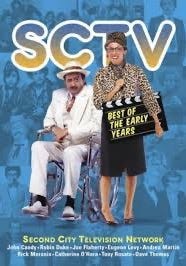
Note: We also had SCTV, which as any Canadian of a certain age will tell you, shaped their very souls. It was also quite possibly the strangest show to ever air on television until Kids in the Hall, also an invention of the Can Con system. You’re welcome, World.
Margaret Atwood, Survival: A Thematic Guide to Canadian Literature (1972): “survival and victims” are the central preoccupations of Canadian literature and poetry, mostly because Canada is a vast, uninhabitable landscape which has colonized our collective expression and wants to kill us.
As an aside: this is turning out to be highly relevant in today’s cold tariff war reality.
Romance is the highest-selling genre in the world, followed by mystery. Nonetheless, this claim might be in actual dispute in Canada, where literary fiction is still king. Then again: tell that to Carley Fortune and Rachel Reid. Mic drop.
Unless you’re published by a savvy Canadian press, Indigo doesn’t know you’re Canadian. They don’t read your bio when they’re adding their ‘Canadian author’ stickers and organizing their ‘Buy Canadian’ sections.
This is not a criticism of that promotion. CBC is doing excellent work.
A new event being debuted in 2026 in Toronto.
Toronto-area indie author and awesome organizer.
Name dropping a few: J. M. Frey, E.M. Williams, Lindo Forbes, Arezou Amin, James Downe, Alli Temple… there is a long list.
Thanks for the shoutout!